
12 Practical Ecommerce Marketing Strategies for Store Success
A stunning website alone is no longer enough to send success your way. Online retailers need to engage in customer acquisition and retention strategies to compete, and the foundation of marketing know-how found here can be your guiding light. With global retail ecommerce sales projected to soar to $8.1 trillion by 2026, the urgency to…
By: Stellar Team · Published: March 31, 2025 · Updated: March 31, 2025
A stunning website alone is no longer enough to send success your way. Online retailers need to engage in customer acquisition and retention strategies to compete, and the foundation of marketing know-how found here can be your guiding light.
With global retail ecommerce sales projected to soar to $8.1 trillion by 2026, the urgency to adopt an effective marketing strategy has never been greater. After all, we’re all in this for a piece of the pie, right? That’s why we’ve put together this guide to offer a unique value proposition — stick with us and you’ll learn the following:
- Budget allocation recommendations for different marketing strategies.
- Implementation timelines that indicate when results can be expected.
- Specific ROI metrics to follow as performance indicators.
Unlike other articles, you’ll discover a prioritized list of actionable strategies, concrete performance metrics, and essential tools for implementation. We’ll round things off with insights into how AI and machine learning can add extra seasoning to your marketing efforts.
Let’s jump right in!
Key points
Setting achievable goals through market and position analysis
One of the keys to implementing any ecommerce marketing strategy is knowing where to start. Setting achievable goals through thorough market and position analysis will give you a solid foundation. Systematic research will help you make accurate, data-driven decisions, so you can identify which strategies are best suited for your own particular circumstances.
Base your market research around the following:
- Competitive analysis: Conduct a SWOT analysis to study competitors’ strengths, weaknesses, opportunities, and threats. Seeing how your rivals position themselves in the market can help you decide on how to differentiate your offerings.
- Identify industry trends: Stay informed about emerging marketplace opportunities, such as the shift toward personalization and the rise of social commerce integrations.
- Customer analysis and segmentation: Analyze your target audience, segmenting them into groups based on demographic, geographic, psychographic, and behavioral factors. Marketing segmentation allows for tailored efforts that connect with each group.
- Internal evaluation: Use the SWOT framework to assess your company’s position in the marketplace prior to entry. From this, you’ll be able to predict channel performance and identify potential pricing adjustments.
Once you’re done with market research, you can establish data-driven goals using the SMART framework — ensuring that goals are Specific, Measurable, Achievable, Relevant, and Time-bound. Next up, we’ll analyze the best methods to get your brand on the grapevine.
12 proven strategies to accelerate your ecommerce growth
There’s a wild number of tactics you can employ within any ecommerce marketing strategy, and some will be product or industry-specific. We’ve focused on the best dozen approaches based on their importance and potential impact — you’ll also find them relevant to any business, no matter how large or small.
1. Search Engine Optimization (SEO)
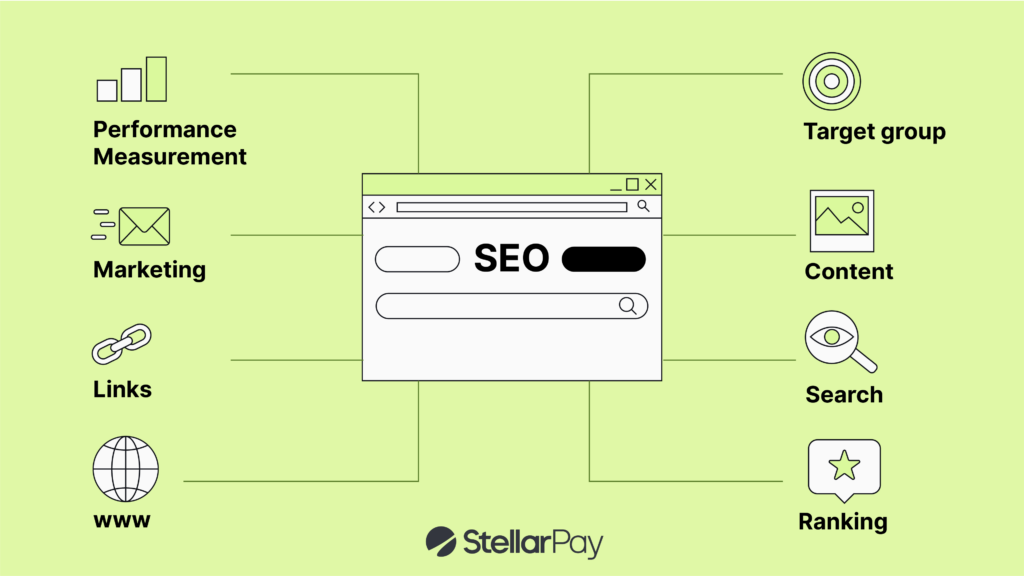
Addressing technical SEO factors sets the stage for your content to be crawled and accurately ranked. Top-ranking pages in the search results receive 10x higher click rates than lower-ranking pages, so technical SEO should be a given tactic.
Include the following in your own technical analysis:
- Action points:
- Schema markup: Implement schema markup for product pages and you can earn a greater presence in the search results.
- Site structure: Refine your site structure to promote easy navigation and ensure none of your content is missed. A good user experience is crucial to your store’s ranking potential.
- Mobile-first indexing: All sites should be optimized for mobile devices, as Google prioritizes mobile-friendly sites. Plus, we’re all crazy about mobile shopping these days — in 2024, 68% of online orders have come via mobile.
- Keyword research: Conduct advanced keyword research targeting buyer intent and detailed long-tail product terms.
- Expected ROI: Successful technical SEO implementation can deliver significant gains of up to 117%.
- Implementation timeline: At least 3-6 months to see significant results.
- Budget allocations: 10-15% of the total marketing budget.
Small businesses should maximize their SEO investment by focusing on local search and Unique Selling Points (USPs). Larger businesses will have the scope to compete on wider SEO, with a strong tech setup acting as a launch pad for creative strategies, like content.
2. Content marketing
Data-driven content creation should target specific buying stages, building up a library of information that meets the needs of users from all stages of the sales funnel. Effective content marketing is fabulous for brand awareness, and high quality content can turn visitors into consumers.
- Action points:
- Product comparison pages: Create comparison pages to help customers make informed purchasing decisions.
- Buying guides: Develop comprehensive buying guides that address common questions and concerns, building an authoritative voice for your brand.
- Technical documentation: Provide detailed technical documentation for complex products.
- Expected ROI: Expect a $5 return for every $1 spent (5:1 ratio).
- Implementation timeline: Content marketing is an ongoing process — the first results can be seen within six months.
- Budget allocation: 25%-30% of the total marketing budget, although this will vary between industries.
Small businesses can use blogs and social media to build brand awareness, while large businesses will have the nous to create diverse content like webinars, ebooks, and whitepapers.
3. Email marketing

Trends may change, but email marketing remains one of the most effective channels for driving sales. Try to focus on segmentation strategies based on the purchase history and browsing behavior of customers.
- Action points:
- Automated workflows: Implement automated workflows for cart abandonment, post-purchase engagement, and win-back campaigns.
- Personalization techniques: Use customer data to personalize email content and encourage greater involvement from users.
- Expected ROI: Up to $36 for every $1 spent.
- Implementation timeline: Expect to see initial results in 3-6 months.
- Budget allocation: Allocate 5%-10% of your marketing budget.
Small businesses should use cost-effective email platforms while personalizing content, whereas large businesses can implement advanced segmentation and automation techniques. Regardless, email marketing is still an arena in which everyone can play!
4. Loyalty programs
Data-driven loyalty programs are an excellent tactic to inspire repeat purchases and amplify your customer retention figures. Include tracking mechanisms to monitor customer engagement and a measurement framework to assess program effectiveness.
- Action points:
- Tiered rewards systems: Implement a tiered rewards structure that incentivizes customers to reach higher spending levels.
- Experiential benefits: Offer exclusive experiences or products as rewards to engage customers emotionally.
- Referral components: Encourage existing customers to introduce new ones by providing rewards for successful referrals.
- Expected ROI: A 5% increase in customer retention can result in a 25%-95% increase in company revenue.
- Implementation timeline: Around 12-14 months, as customers need time to adapt to the loyalty program.
- Budget allocation: Roughly 27% of your total marketing budget.
Small businesses can use affordable tools like Smile.io to create points, referral, and VIP rewards with ease. Large businesses should develop tiered programs to incentivize higher spending.
5. Social media marketing
Social media marketing is like having a digital bullhorn — it’s a great platform to shout about your business in multiple ways and connect directly with your customer base. Focus on platform-specific strategies, with a firm eye on conversions, and research how different users enjoy social media — from an info-giving tool to a shopping platform, or simply for some product inspiration.
- Action points:
- Organic content strategy: Create engaging organic content that connects with your audience and encourages sharing. Understanding platform-specific conversion rates will help you squeeze the most juice from your campaigns.
- Paid amplification tactics: Use paid advertising to boost visibility and reach on platforms like Facebook, Instagram, and YouTube, which displayed the highest ROIs in 2023.
- Expected ROI: Average of 95%.
- Implementation timeline: Results typically start appearing after approximately six months of consistent effort.
- Budget allocations: Allocate around 12% of your marketing budget.
Small businesses should focus on platforms where their target audience is most active, while large businesses can maintain a tailored presence across multiple platforms to gain a broader reach.
6. Pay-Per-Click (PPC) advertising
Successful PPC advertising requires a structured approach to full-funnel campaigns. Optimizing your Google Shopping feed and implementing dynamic marketing techniques can improve campaign performance.
A Google Shopping Feed is a structured data file containing detailed information about products that a retailer wants to advertise on Google Shopping. A well-optimized Google Shopping Feed improves visibility and click-through rates, ultimately driving sales.
Dynamic marketing techniques are strategies that use customer data to create personalized and relevant marketing experiences. They can help grow strong customer relationships and drive sales by delivering timely, relevant content.
- Action points:
- Clear objectives: Set specific objectives for each campaign to guide strategy and execution.
- Accurate CPC forecasting: Allocate budgets based on accurate Cost-Per-Click (CPC) forecasting and campaign requirements.
- Targeted landing pages: Make PPC campaigns more effective by directing traffic to dedicated landing pages rather than just the homepage.
- Expected ROI: Around 200%.
- Implementation timeline: Approximately three months to see significant results.
- Budget allocation: Budget allocation varies widely based on industry, competition, and seasonal factors, so adjust your budget if no significant changes are observed after three months. In digital, dynamism is everything!
Small businesses should start with a limited budget focused on high-intent keywords, while large businesses can invest in comprehensive and segmented campaigns across multiple channels.
7. User-Generated Content (UGC)
Scaling UGC can encourage customer engagement and add some extra credibility to your brand. Data shows that ads featuring UGC have a 4x higher click-through rate than those without, and approximately 46% of consumers trust online reviews as much as personal recommendations.
- Action points:
- Review generation systems: Implement systems to encourage customers to leave reviews after purchases.
- Visual UGC campaigns: Create campaigns that invite customers to share photos or videos using your products.
- Social proof integration: Use customer testimonials, rating systems, and customer reviews across your site and social media to build trust.
- Expected ROI: Ads with UGC have a much higher click-through rate than ads without.
- Implementation timeline: The timeline is difficult to define as it depends on the type of UGC being implemented.
- Budget allocation: Budgeting for UGC varies based on the scale of implementation.
Small businesses should focus on low-cost implementations like adding reviews or customer testimonials to their landing pages, while large businesses can actively curate large-scale brand engagement across multiple channels.
8. Affiliate marketing
Partner collaborations through affiliate marketing give your brand an additional voice in a busy marketplace. Implement tracking systems like Voluum to monitor affiliate performance, and software like software like IPQualityScore to prevent fraud. To avoid future problems, tracking tools should integrate with your existing tech stack.
- Action points:
- Program structure: Establish a clear structure for your affiliate program that outlines commission rates and payment terms.
- Commission optimization: Adjust commission rates based on performance to incentivize top-performing affiliates.
- Partner selection criteria: Choose partners whose audience aligns with your target market for better conversion rates.
- Expected ROI: Around $15 for every $1 spent (15:1 ratio).
- Implementation timeline: Expect results within a few weeks to a few months if executed properly.
- Budget allocation: Average costs are around $600 to start but can scale easily depending on your business size.
Small businesses can use affiliate networks to find long-term partners, while large businesses may benefit from developing in-house affiliate programs for better control over their partnerships.
9. Retargeting campaigns
Retargeting campaigns can re-engage potential customers who have previously interacted with your brand. Think of them like a friendly tap on the shoulder — ‘hey buddy, remember us?!’ You can incorporate attribution modeling and incrementality testing to measure the effectiveness of your retargeting efforts.
- Action points:
- Advanced segmentation strategies: Segment users based on their behavior, such as pages visited or actions taken on your site.
- Cross-channel retargeting implementation: Use multiple channels (social media, display ads) to reach users across different platforms.
- Frequency optimization: Monitor ad frequency to avoid overwhelming users while ensuring consistent visibility.
- Expected ROI: Expect a 10x increase in click-through rates if retargeting campaigns are implemented correctly.
- Implementation timeline: There is no concrete timeline; however, continuous scaling and maintenance will yield better ROI over time.
- Budget allocation: Allocate around 20% of your total marketing budget for retargeting efforts.
Small businesses can use granular retargeting strategies to reduce cart abandonment, while large businesses will have the scope to launch dynamic retargeting across multiple channels.
10. Conversion Rate Optimization (CRO)
CRO is a means of making the top of your sales funnel that bit more effective by turning interest into sales. Focus on data-driven testing methodologies — understanding statistical significance during tests will help you focus on the most impactful changes.
- Action points:
- Checkout optimization: Streamline the checkout process using tools like StellarPay, which offers great options for improving checkout efficiency and reducing cart abandonment.
- Product page testing: Experiment with different layouts, images, and descriptions to determine what connects with your audience.
- Mobile conversion tactics: Ensure your site is fully optimized for mobile users, as a significant portion of ecommerce traffic comes from mobile devices.
- Expected ROI: Normal ROI ranges from 2%-3%, but achieving 10% is definitely possible.
- Implementation timeline: Typically, results can be seen within 6 months to a year.
- Budget allocation: Allocate 10%-30% of your marketing budget.
Small businesses should prioritize improvements that directly improve the User Experience (UX), while large businesses can gain deeper insights by using advanced analytics and A/B testing.
11. Marketplace expansion
Expanding into new marketplaces brings you in touch with a potentially vast number of new customers. Focus on selecting the right marketplaces and optimizing your presence within these. Cross-marketplace analytics will help you track performance and optimize strategies accordingly.
- Action points:
- Marketplace selection criteria: Identify platforms where your target audience is most active and engaged.
- Inventory management: Ensure you have adequate inventory to meet demand across multiple marketplaces.
- Pricing strategies: Adjust pricing based on marketplace dynamics to remain competitive.
- Fulfillment considerations: Plan for efficient fulfillment processes to maintain customer satisfaction.
- Expected ROI: Depends on the scale of marketplace expansion.
- Implementation timeline: Highly variable based on the level and scale of implementation.
- Budget allocations: Initial budget allocation varies; a rough estimate for medium-sized marketplace website development is around $140,000-$200,000.
Small businesses should focus on one or two platforms where their target audience is most active, while large businesses can scale across multiple marketplaces and invest in platform-specific advertising for broader visibility.
12. Influencer marketing
Influencers can act as an additional voice for your brand, bringing with them a high number of followers, AKA potential customers. Focus on ROI-driven influencer selection and campaign measurement, refining your strategies based on cold, hard evidence.
- Action points:
- Performance-based compensation models: Structure compensation based on the performance of influencer campaigns to align incentives with results.
- Content guidelines: Provide clear guidelines to ensure that influencer content aligns with your brand voice while allowing for authenticity.
- Authenticity preservation: Encourage influencers to share genuine experiences with your products to build trust with their audience.
- Expected ROI: Approximately $6.5 in revenue for every $1 spent (6.5:1 ratio).
- Implementation timeline: Typically takes 2-3 months to see results.
- Budget allocation: Allocate around 20% of your total marketing budget for influencer partnerships.
Small businesses can collaborate with micro-influencers for cost-effective campaigns, while large businesses may engage macro-influencers or celebrities.
Setting up analytics for measurable marketing success
Establishing Key Performance Indicators (KPIs) at the very beginning allows you to evaluate the effectiveness of your marketing strategies and make any necessary changes.
The following table outlines the most important KPIs that companies can use to get started:
|
KPI |
Strategies Measured |
Why it’s Important |
|---|---|---|
|
Organic traffic potential |
SEO, content marketing |
Organic traffic is the foundation for sustainable growth, particularly for ecommerce businesses focused on building long-term visibility and driving conversions through unpaid search channels. |
|
Cost-effectiveness (ROI) |
All marketing strategies |
Measures the return on investment, helping prioritize strategies that provide the most value for the least cost. Email marketing and SEO consistently rank among the highest-ROI strategies. |
|
Long-term ROI |
All marketing strategies |
Evaluates the impact of strategies over time, emphasizing sustainable growth. Particularly valuable for content-heavy strategies and customer retention efforts. |
|
Audience engagement |
Content marketing, social media marketing, UGC |
Tracks how well your audience interacts with your brand; can foster trust and help maintain a loyal customer base. |
|
Conversion rate improvement |
Retargeting campaigns, CRO, UGC, SEO, PPC |
Measures the percentage of visitors who take desired actions, such as completing a purchase, providing a direct measure of campaign effectiveness. |
|
Customer retention rate |
Loyalty programs, email marketing |
Retaining customers is more cost-effective than acquiring new ones, making this KPI critical for long-term profitability and customer loyalty strategies. |
Combining data sources
To gain deeper insights into marketing performance, combine data sources using the following strategies:
- Cross-reference payment data with marketing campaigns: Analyze how different marketing campaigns influence payment data. This will help you identify which strategies bring the highest sales and conversions.
- Track customer journey touchpoints: Map the customer journey to understand how customers interact with your brand across various channels. This allows for better targeting and personalized marketing efforts.
- Measure channel attribution accurately: Implement multi-touch attribution models to determine how each channel contributes to conversions. This will help you allocate budget and resources more effectively.
Actionable steps for KPIs
Organic traffic potential:
- Conduct keyword research to identify relevant search terms.
- Optimize website content and meta tags with targeted keywords.
- Create high-quality, informative blog posts or articles to attract organic traffic.
- Build backlinks through guest blogging and partnerships with relevant websites.
Cost-effectiveness (ROI):
- Track all marketing expenses using dedicated ROI tracking software.
- Calculate ROI for each campaign by dividing net profit by total costs and multiplying by 100.
- Focus on strategies with the highest ROI, such as email marketing and SEO, and allocate your budget accordingly.
Long-term ROI:
- Set up a system to track Customer Lifetime Value (CLV) to understand long-term profitability.
- Regularly review the performance of content-heavy strategies and adjust based on results.
- Implement customer feedback loops to improve retention strategies over time.
Audience engagement:
- Use social media analytics tools to monitor engagement metrics (likes, shares, comments).
- Create interactive content like polls, quizzes, or user-generated content campaigns to boost engagement.
- Respond promptly to audience interactions to foster community and trust.
Conversion rate improvement:
- Use A/B testing on landing pages and Calls-to-Action (CTAs) to determine what works best with your audience.
- Implement retargeting campaigns to re-engage visitors who did not convert initially.
- Analyze user behavior through heatmaps and session recordings to identify obstacles in the conversion path.
Customer retention rate:
- Launch loyalty programs that reward repeat purchases and encourage long-term relationships.
- Use email marketing campaigns to keep customers informed about new products and promotions.
- Collect feedback through surveys to understand customer satisfaction and areas for improvement.
Recommended marketing tools
There are a million marketing tools out there, and finding the right ones can make all the difference to your campaign. Scalable tools are a smart approach as they minimize the challenges associated with data migration when your business expands.
Don’t worry about putting your research hat on and dedicating the next few months to swotting up on software — we’ve done all the work for you. Here are some budget-friendly options that offer real scalability:
Buffer
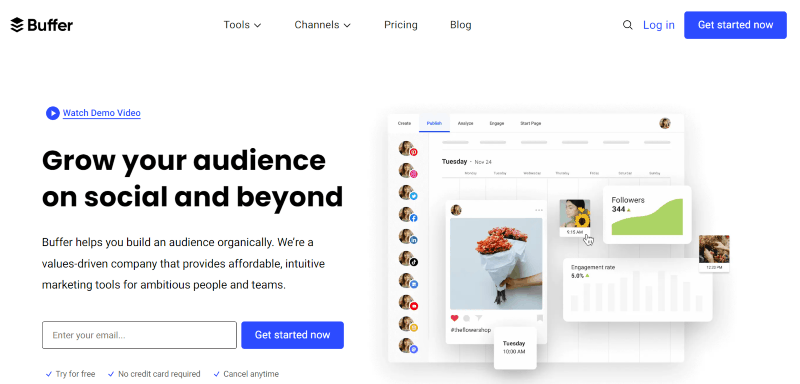
Buffer is a social media management tool that allows users to schedule posts, track performance, and engage with audiences across multiple platforms from a single dashboard.
- Functionalities: Social media management, content scheduling, analytics, and engagement tracking.
- Marketing strategies: Content marketing, social media marketing, UGC.
- Cost: Free plan available; paid plans start at $5 per month per social channel.
Google Analytics

A well-known web analytics tool, Google Analytics is completely free to use.
- Functionalities: Website traffic analysis, user behavior tracking, conversion rate monitoring.
- Marketing strategies: SEO, content marketing, CRO.
- Cost: Free.
Mailchimp
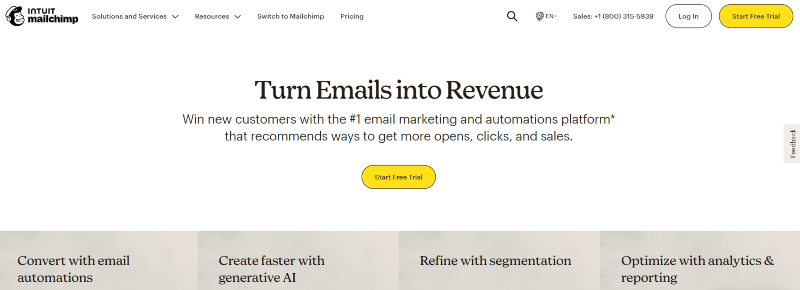
Mailchimp is an email marketing platform that offers tools for creating, sending, and tracking email campaigns.
- Functionalities: Email marketing automation, audience segmentation, performance analytics.
- Marketing strategies: Email marketing, customer retention.
- Cost: Free plan available; paid plans start at $20 per month.
Ahrefs Webmaster Tools

Ahrefs Webmaster Tools include a Site Explorer for competitor research, Keywords Explorer to better inform your content, and Web Analytics for performance insights. A Site Audit tool helps users audit their websites for technical issues, and a Content Explorer tool helps you find new ideas that your customers will love.
- Functionalities: SEO analysis, backlink tracking, keyword research, site audits.
- Marketing strategies: SEO, content marketing.
- Cost: Free access to basic Webmaster Tools; premium plans start at $29 per month.
Google Search Console
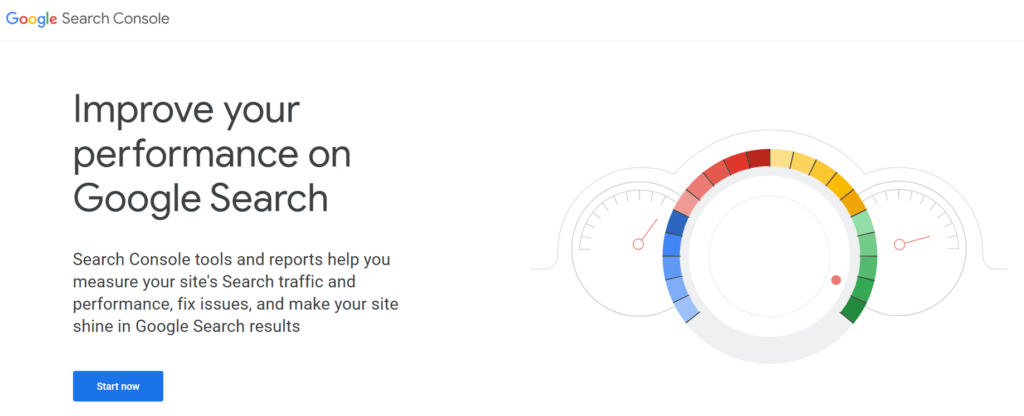
Google Search Console is another free tool that allows website owners to monitor their site’s SEO performance. It’s great for keeping checks on overall site health.
- Functionalities: Monitors website performance in Google Search, identifies indexing issues, and provides insights into search queries.
- Marketing strategies: SEO, content marketing.
- Cost: Free.
Semrush SEO Toolkit
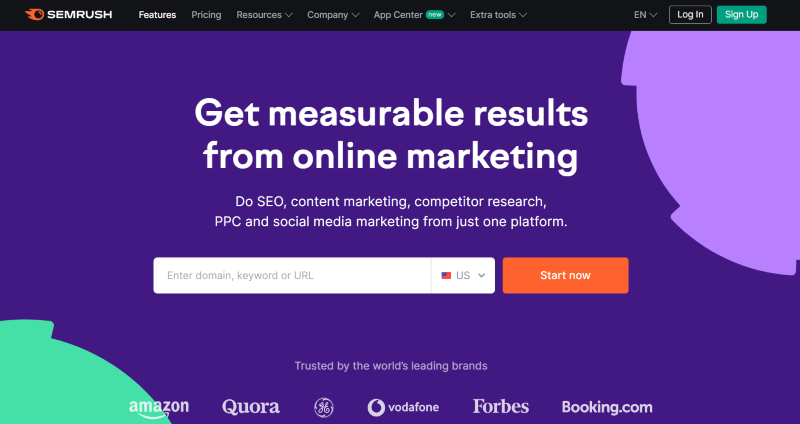
Semrush offers a comprehensive SEO toolkit that helps businesses optimize their online presence by providing insights into organic search performance.
- Functionalities: Comprehensive SEO analysis, keyword research, site audits, and competitor analysis.
- Marketing strategies: SEO, content marketing.
- Cost: Offers a free plan with limited features; paid plans start at $117.33 per month when billed annually. Good for scaling.
Hotjar
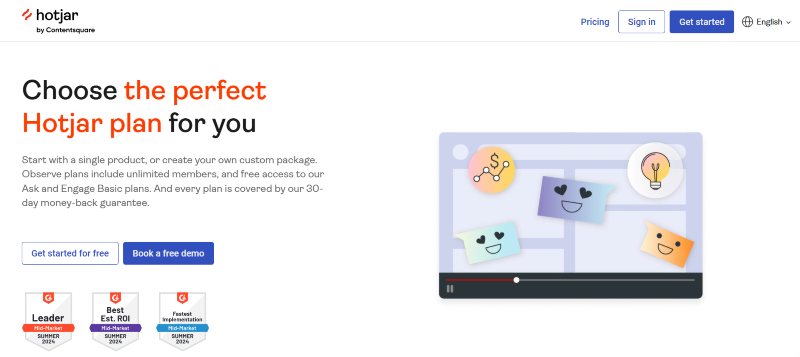
Hotjar is a behavior analytics tool that provides insights into how users interact with websites. By visualizing user behavior, the tool helps businesses improve UX and drive conversions.
- Functionalities: User behavior analytics, heatmaps, session recordings, and feedback polls.
- Marketing strategies: CRO.
- Cost: Free plan available; paid plans start at $32 per month.
Emerging technologies in high-impact areas to keep in mind
As every website owner will be aware, digital marketing is an ever-evolving beast.
Emerging AI technologies are becoming indispensable tools for marketers, from organizing processes to reducing project timescales. Nearly 75% of marketers believe AI will play a crucial role in their jobs within the next year, reflecting its growing importance in various aspects of marketing. If you haven’t already explored the possibilities offered by AI, now’s the time to start — there’s a very good chance your competitors will be involved already.
Benefits of using AI in marketing
- Personalization of shopping experience: AI enables businesses to deliver personalized experiences by analyzing customer data to tailor recommendations and content. This inspires greater user engagement while driving higher conversion rates, as customers are more likely to purchase products that are in-line with their preferences.
- Chatbots: Advanced AI chatbots provide real-time customer support, answering queries and assisting with purchases 24/7. By automating routine inquiries, chatbots free up human resources for more complex tasks while ensuring customers receive immediate assistance, leading to improved satisfaction and loyalty.
- Email customizations: AI-driven email marketing tools allow for dynamic content personalization based on user behavior and preferences. Marketers can segment their audience more effectively, optimizing send times and content to maximize engagement and reduce unsubscribe rates.
- Content creation: AI tools can generate high-quality content at scale, reducing the time marketers spend on writing and editing. By using Natural Language Processing (NLP), these tools can produce articles, social media posts, and product descriptions that align with brand voice and SEO best practices.
- SEO analysis: AI technologies can provide insights into keyword performance, backlink opportunities, and site audits. Dedicated SEO tools are able to analyze vast amounts of data, helping marketers optimize their content for better search engine rankings.
Technologies like Adjust, Semrush, and HubSpot demonstrate how AI can be integrated into marketing strategies to save time and improve outcomes. The integration of these tools simplifies workflows while providing valuable insights that drive better decision-making. AI isn’t a replacement for humans, but it can be an invaluable addition to your team.
Ready to scale your store’s success? Next steps
So there we have it! Crafting a winning ecommerce marketing strategy may seem pretty terrifying at first, but with clearly defined goals, the decision-making process becomes much easier. Get your head around the different marketing channels and tactics and you’ll be able to plot out a logical course to driving traffic — and increasing sales.
Although you’re now equipped to go forth and prosper with your ecommerce marketing, spare a thought for your online payment system before you go. While this may not be a direct marketing tool, your checkout and payment processes make a massive contribution to your conversion figures. Trying to drive conversions with a poor checkout process is no different to trying to compete in search engine results without SEO.
“We’ve simplified online payment systems with StellarPay to help reduce cart abandonment rates and transform more visitors into customers. Our platform offers a strategic edge to website owners by integrating with your existing software, while scaling with your business needs.”
Devin Walker, Chief of Innovation, StellarWP
Free from fees and more intuitive than other solutions you’ll find, why not try StellarPay today, and add the final piece of the puzzle to your ecommerce marketing strategy?


Stay Updated
Stay informed about the latest StellarPay updates, new features, and improvements. Subscribe to our newsletter for expert tips to help your clients succeed with their eCommerce websites.

